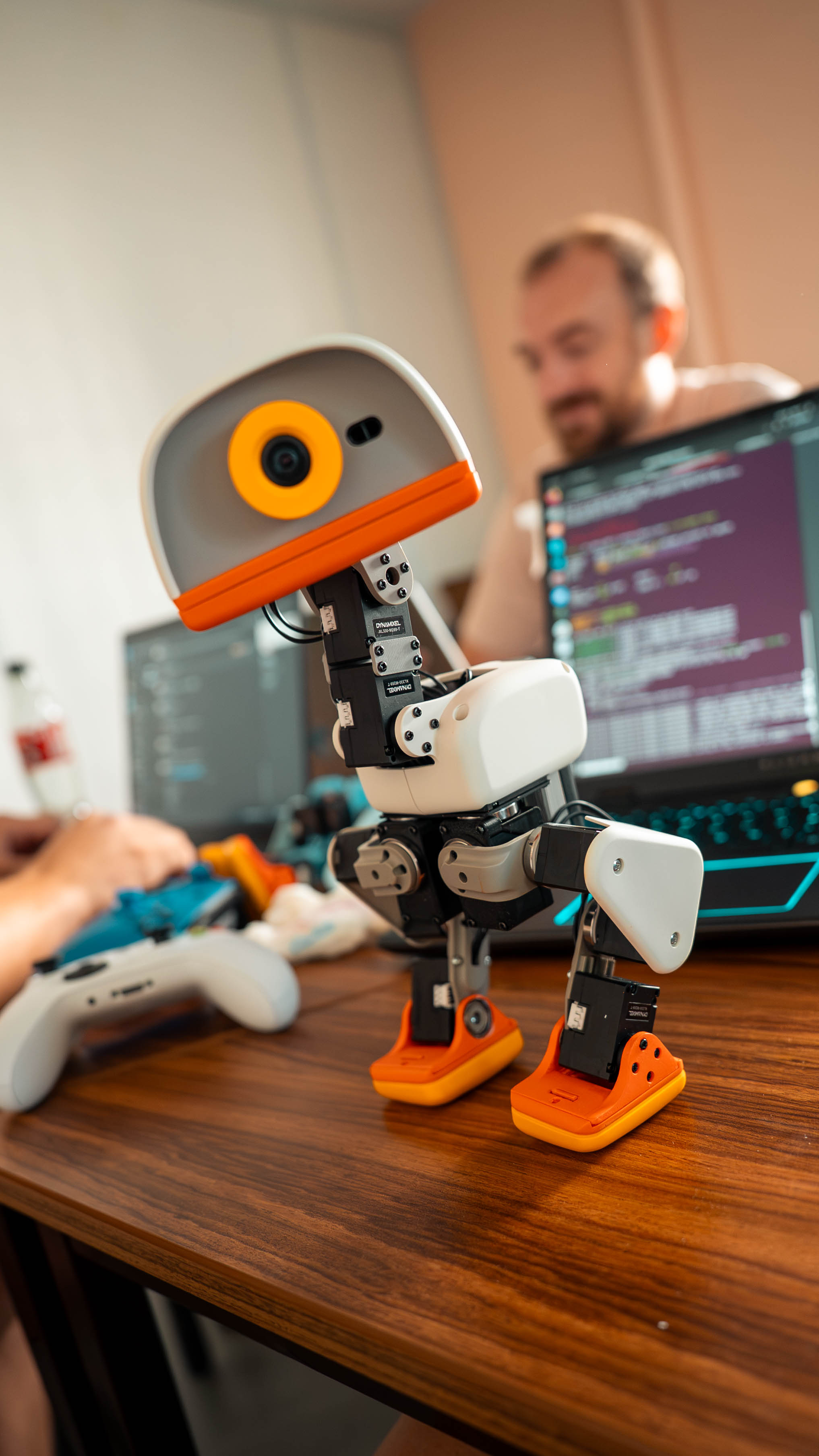
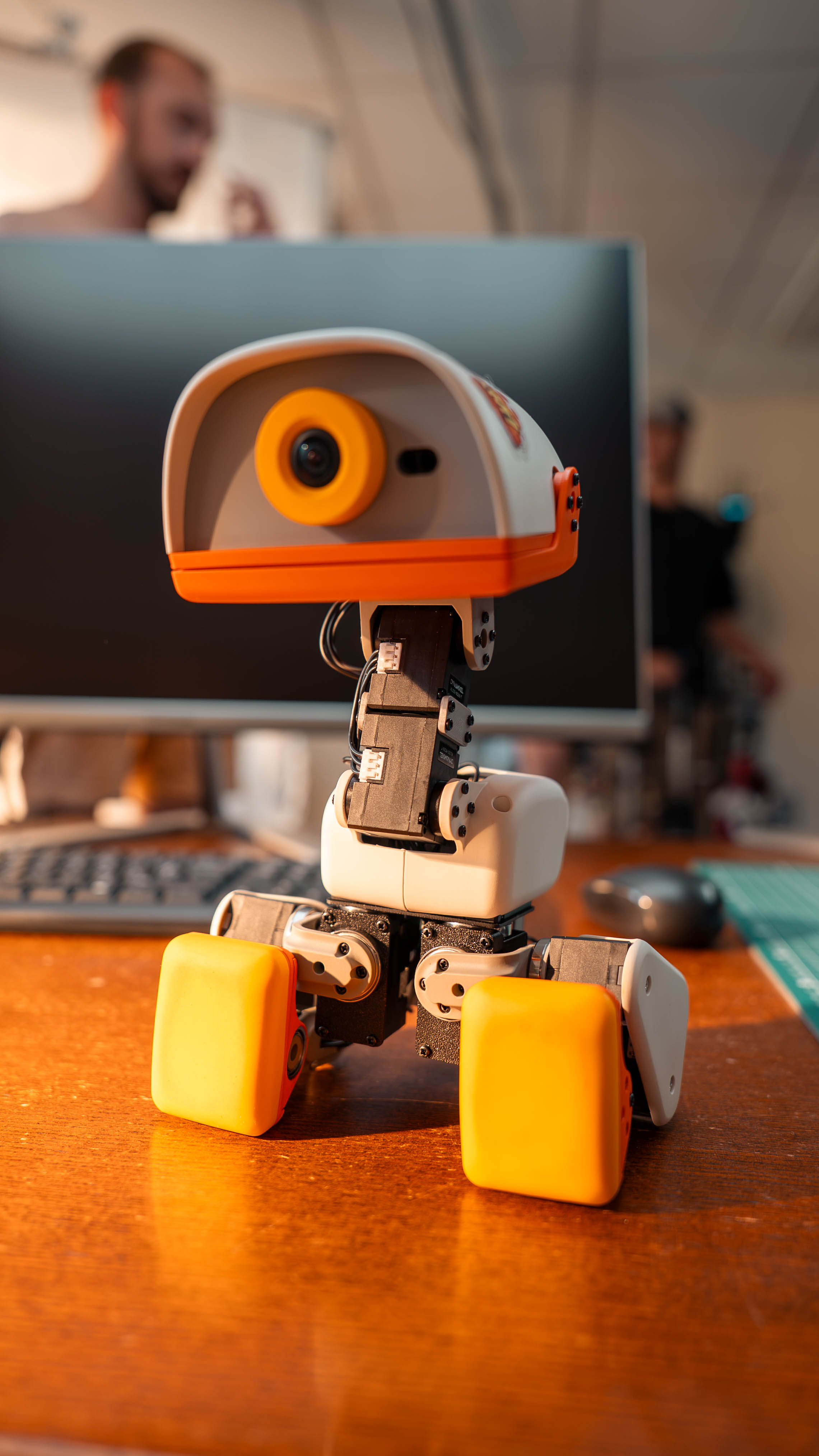
MicroDuck by Pollen Robotics. These product photos do not depict a DuckEMW hardware test.
Photo: Pollen Robotics ↗Two paths into the same experiment.
Understand the measurement.
Study velocity targets, observed speed, stability and the evaluation window.
Read the speed notes →Connect a beat to a move.
Explore tempo, segments and compatibility with a dance policy.
Read the timeline guide →Read the iterations, too.
Original project by emwstudio. The author’s training log records experiments, unsuccessful changes and revised conclusions. Those notes give the result its context.
Available materials.
| MATERIAL | AT THE REVIEWED SOURCE |
|---|---|
| Code & written notes | Public repository |
| Trained models & finished video | Not included in the root repository |
| Music audio | Not included |
What would you like to understand next?
Keep the source, your environment and your observations together.
Before you continue
Do the DuckEMW results demonstrate physical robot performance?
No. They are the project author’s simulation reports. Read the experiment revision and measurement conditions before comparing results.
Applies to: DuckEMW · emwstudio. Keep the model, image, software and driver versions together. The dated sections below retain their original verification limits.
Source checked:
Next useful guides
DuckEMW Dance Timeline: Beats, Moves & Policy Playback
Read DuckEMW dance timeline source notes: tempo, first-beat offsets, movement segments and policy compatibility for MicroDuck simulation.
DuckEMW Sprint Speed: Average vs Peak Measurements
Interpret DuckEMW simulation speed results, including reported average and upright-gated peak speed, with source revisions and measurement limits.
MicroDuck Simulator: First Walk and Public Move Loading
Walk in the official MicroDuck browser simulator, load a public policy by URL, check manifest compatibility and restore the built-in move.